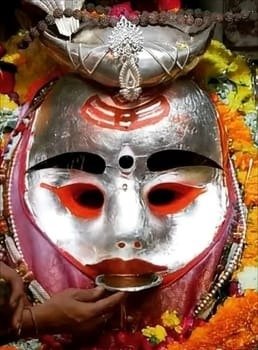
Among the countless sacred shrines of Madhya Pradesh, none captures the curiosity and devotion of pilgrims quite like the ancient Kaal Bhairav Temple in Ujjain. Situated on the serene banks of the Shipra River in the Bhairavgarh suburb, this historic temple is famous across the globe for a mystical phenomenon that defies modern science: the continuous, direct consumption of sacred liquor by the stone idol of Bhagwan Kaal Bhairav.
Beyond the miracle, Kaal Bhairav holds an essential administrative position in the sacred geography of Avanti. For generations of visiting devotees, paying homage to the divine Kotwal (magistrate) is the ultimate safeguard for a peaceful and blessed journey. Here is everything you need to know before visiting.

1. The Kotwal of Avanti: Who is Kaal Bhairav?
In Sanatan philosophy, Bhairav is the fierce manifestation of Lord Shiva associated with the annihilation of fear, pride, and illusion. When Lord Shiva severed the fifth head of Lord Brahma due to arrogance, the severed skull clung to his hand as a sign of Brahmahatya dosha. Shiva wandered the world until he reached the sacred soil of Avanti on the banks of Kshipra, where the skull fell away, liberating him.
Thereafter, Lord Shiva consecrated Kaal Bhairav as the eternal Kotwal (Commander and Chief of Police) of Ujjain. Ancient belief holds that:
- Bhagwan Mahakal is the celestial Emperor of Time (Maha-Kaal).
- Kaal Bhairav is the chief administrator who oversees the city daily justice, borders, and spiritual security.
- Pilgrims must present themselves before Kaal Bhairav to register their presence and obtain his divine blessings before leaving the city borders.
2. The Liquor Prasad (Madira Arpan) Ritual Explained
The central ritual that draws thousands of devotees daily is the Madira Arpan. While liquor is strictly prohibited across all other religious shrines in Ujjain, it is offered here with deep reverence as sacred prasad.

How the Offering Takes Place
When you enter the sanctum sanctorum, you hand your sealed bottle of liquor to the temple priest. The priest breaks the seal, pours the liquid into a shallow, flat brass saucer, and gently tilts the saucer against the mouth of the deity. In front of your eyes, the liquid recedes steadily and empties within a few seconds. The priest then returns a few drops in your bottle as sanctified Charanamrit, along with a smear of sacred vermilion and holy ash (Baboot).
Over the past two centuries, multiple investigative efforts have attempted to uncover a mechanical explanation. During British rule, colonial administrators had the floor around the deity excavated, suspecting a hidden drain or underground pipe leading into the riverbed. None was ever found. In modern times, civil engineers and geologists inspected the solid stone structure and found no subterranean voids, porosity, or drainage channels. For believers, it remains an extraordinary demonstration of the living presence of the deity.
From a philosophical standpoint, the Tantric Kapalika tradition uses the offering to illustrate that God transcends all human categories of pure and impure. What human society considers taboo is surrendered at the feet of the Lord as an offering of one’s attachments and inner ego.
3. Daily Timings, Aarti Schedule & Best Visiting Hours
The temple operates long hours to accommodate the steady stream of pilgrims:
| Event / Phase | Timings | Crowd Level & Devotee Guidance |
|---|---|---|
| Morning Temple Opening & Snan | 05:00 AM – 06:00 AM | Peaceful atmosphere. Priests bathe and dress the deity with flowers and traditional Malwi turban. |
| Morning Mangala Aarti | 06:00 AM | Resonant damru beats and conch shells. Highly auspicious for meditation. |
| Golden Visiting Window | 06:30 AM – 08:30 AM | Recommended for families: Minimal wait time (under 15 minutes). Ample space to view the ritual closely. |
| Midday Peak Rush | 11:00 AM – 04:00 PM | High wait times (45 to 90 minutes), especially on Sundays, Tuesdays, and holiday weekends. |
| Evening Sandhya Aarti | 08:00 PM | Magnificent brass lamp ritual. Sanctum illuminated with hundreds of mustard oil diyas. |
| Temple Closing | 10:00 PM | Gates close for night rest (Shayan). |
4. Prasad Shopping: Official Counters vs Aggressive Touts
As your vehicle approaches the Bhairavgarh area, you will encounter the single biggest nuisance for first-time visitors: aggressive touts and shop boys running into the street, waving their arms, and attempting to force your auto to halt at their roadside shacks.
Never stop for street touts who claim: “Sir, cars cannot go further, you must buy your prasad basket here.” This is completely untrue. Instruct your driver to proceed all the way to the main temple parking lot near the entrance gate.
Walk directly to the authorized, government-licensed counters positioned right beside the official shoe deposit facility. Here, prices are printed clearly on boards:
- Standard basket with flowers, vermilion, mustard lamp, and batashas: INR 50 to INR 100.
- Authorized sealed miniature liquor bottle: INR 60 to INR 150 (depending on brand and quantity).
5. How to Reach Kaal Bhairav: Distances & Real Auto Fares
Kaal Bhairav Temple is located roughly 5.5 kilometers north of the Mahakaleshwar temple complex in the Bhairavgarh area, famous for its centuries-old hand-block batik printing heritage.
- Private Auto Rickshaw (One-Way): Fair local pricing is between INR 150 and INR 200 from the Mahakal or Ramghat area.
- Round Trip with Waiting Time: Expect to pay INR 300 to INR 400. The driver will wait 30 to 45 minutes while you complete your darshan and bring you back.
- Shared E-Rickshaws: If traveling on a budget, hop on a shared e-rickshaw from Mohan Nagar or KD Gate for INR 30 per seat.
6. Architectural History and the Maratha Scindia Legacy
While references to Kaal Bhairav date back thousands of years in the Avantika Khanda of the Skanda Purana, the present stone structure has deep historical ties to the Maratha Empire.
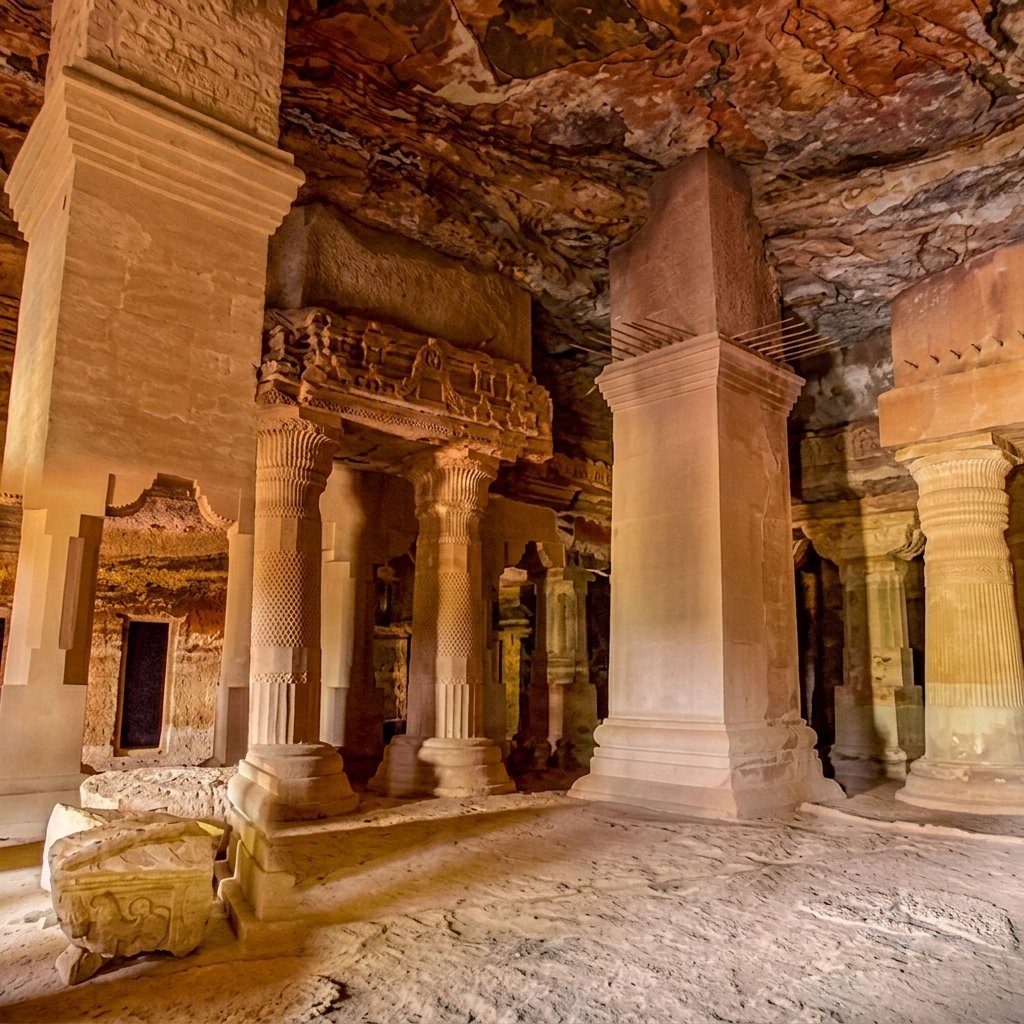
Following the Third Battle of Panipat in 1761, the legendary Maratha statesman and general Mahadji Scindia prayed fervently at Kaal Bhairav shrine for the restoration and victory of his forces. After re-establishing Maratha sovereignty over north India and regaining Gwalior and Ujjain, he extensively renovated the temple in gratitude, adding the majestic stone shikhar, the brass-plated doorframes, and the surrounding pillared courtyards in the distinct Maratha-Malwa architectural style.
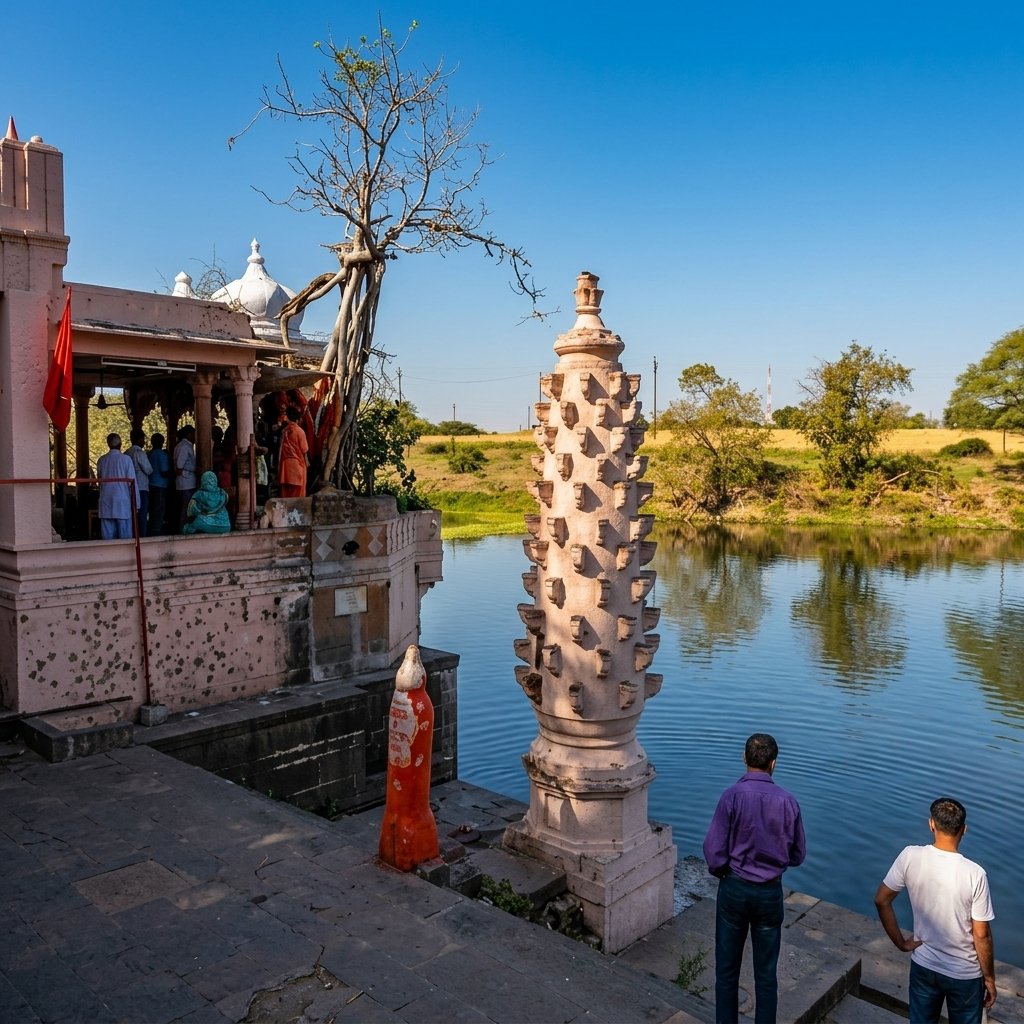
Inside the temple complex, look out for the ancient Deepstambh (lamp pillar), which is illuminated with hundreds of clay lamps on Kalabhairav Jayanti (the eighth lunar day of the dark fortnight of Margashirsha).
7. Sanctum Rules: Photography, Footwear & Charanamrit
To ensure a respectful and seamless visit, keep these practical guidelines in mind:
- Footwear Storage: Leave your shoes at the free official shoe stand near the outer arch. Do not leave shoes inside auto rickshaws or haphazardly along the road.
- Photography Restrictions: Photography and videography are strictly prohibited inside the inner sanctum. Keep mobile phones in your pocket or bag.
- Accepting Charanamrit: When the priest hands back a small portion of the offered liquor, devotees treat it with supreme sanctity. You may apply a drop to your forehead as blessings or carry the bottle back as a protective talisman for your home.
- Coconut Ritual: Devotees frequently offer a coconut. A temple attendant will crack it outside the inner shrine and return the blessed kernel to you.
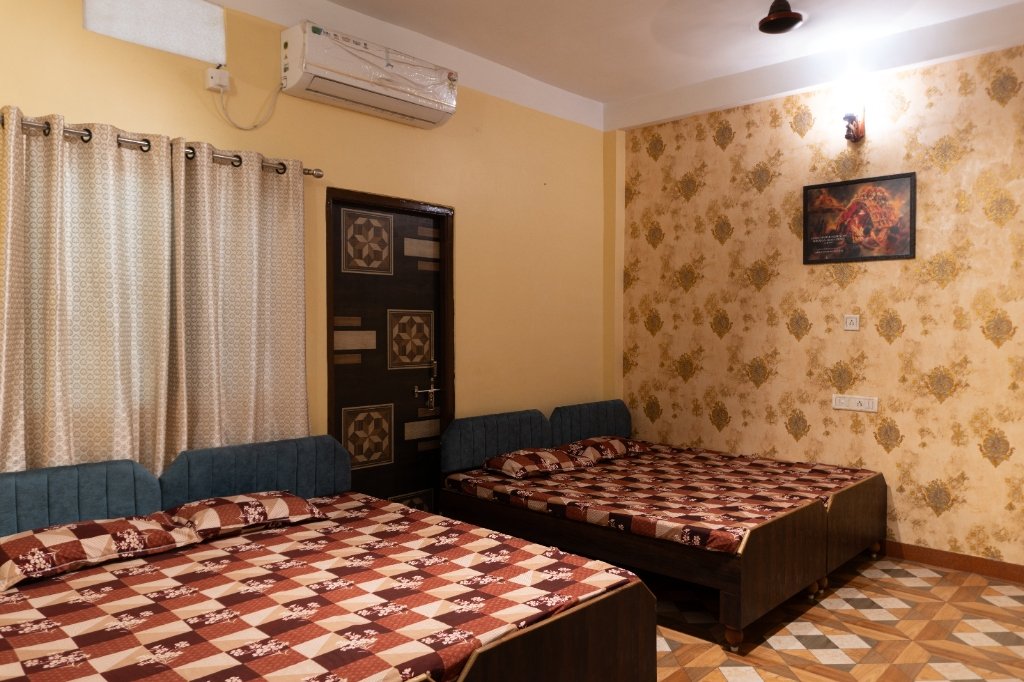
Visiting Ujjain? Stay in Divine Comfort at Vedika Stays
Skip crowded commercial hotels and stay in a private luxury family floor apartment on sacred Ramghat Marg, just a 3-minute stroll from holy Kshipra and 5 minutes from Mahakal Gate 4.
Shri Mahakaleshwar Temple Management Committee and local police authorities dynamically adjust entry gates, queue barricading, VIP entry lines, and darshan schedules during heavy crowd rushes, weekends, and major festival periods (such as Sawan, Mahashivratri, and Simhastha). All information, gate assignments, and timings provided in this guide reflect standard, general operational arrangements. Devotees are kindly advised to follow on-ground police instructions, official signboards, and temple public address announcements on the day of their visit.
Frequently Asked Questions About Kaal Bhairav Ujjain
Do temple darshan timings, ticket rules, or entry gates change during peak rush?
Why is liquor offered to Bhagwan Kaal Bhairav in Ujjain?
Where does the liquor go when offered to the idol?
What are the daily temple timings for Kaal Bhairav Ujjain?
Where should I buy the liquor prasad basket to avoid being cheated?
What does a standard prasad basket include and what does it cost?
How far is Kaal Bhairav Temple from Mahakaleshwar Temple and what is the auto fare?
Why is Kaal Bhairav called the Kotwal of Ujjain?